Brevity AI · Healthcare · Clinical workflow

Surgical Video Summarization Service

The interesting question was not whether AI could summarize surgical video. It was whether a summary could enter a real clinical workflow without losing the source, adding more work for clinicians, or quietly taking responsibility for a decision it should not make.

My role
UX Designer for Chronicle; Co-founder and CPO; sole UX lead at Brevity AI
Primary actors
Residents, attending surgeons, the Chronicle team, technical partners, legal, compliance, IRB, and an AI-assisted system
Status
Surgeon-tested concept and pilot workflow evaluated; no clinical efficacy or production deployment claimed
System scope
Capture, secure transfer, summarization, review, storage, consultation, and adoption

Observed

Visual evidence required a viable service

The interface alone could not resolve capture, time, incentives, security, or responsibility.

Pilot signal

Reported 5/5 confidence

The public record reports unanimous 5/5 confidence; the exact reviewer count, note scores, and rating instrument were not preserved.

Not proven

Clinical efficacy and time savings

No diagnostic-accuracy, efficacy, clearance, or broad-adoption claim is made.

Service challenge

The summary was only useful if the surrounding service worked

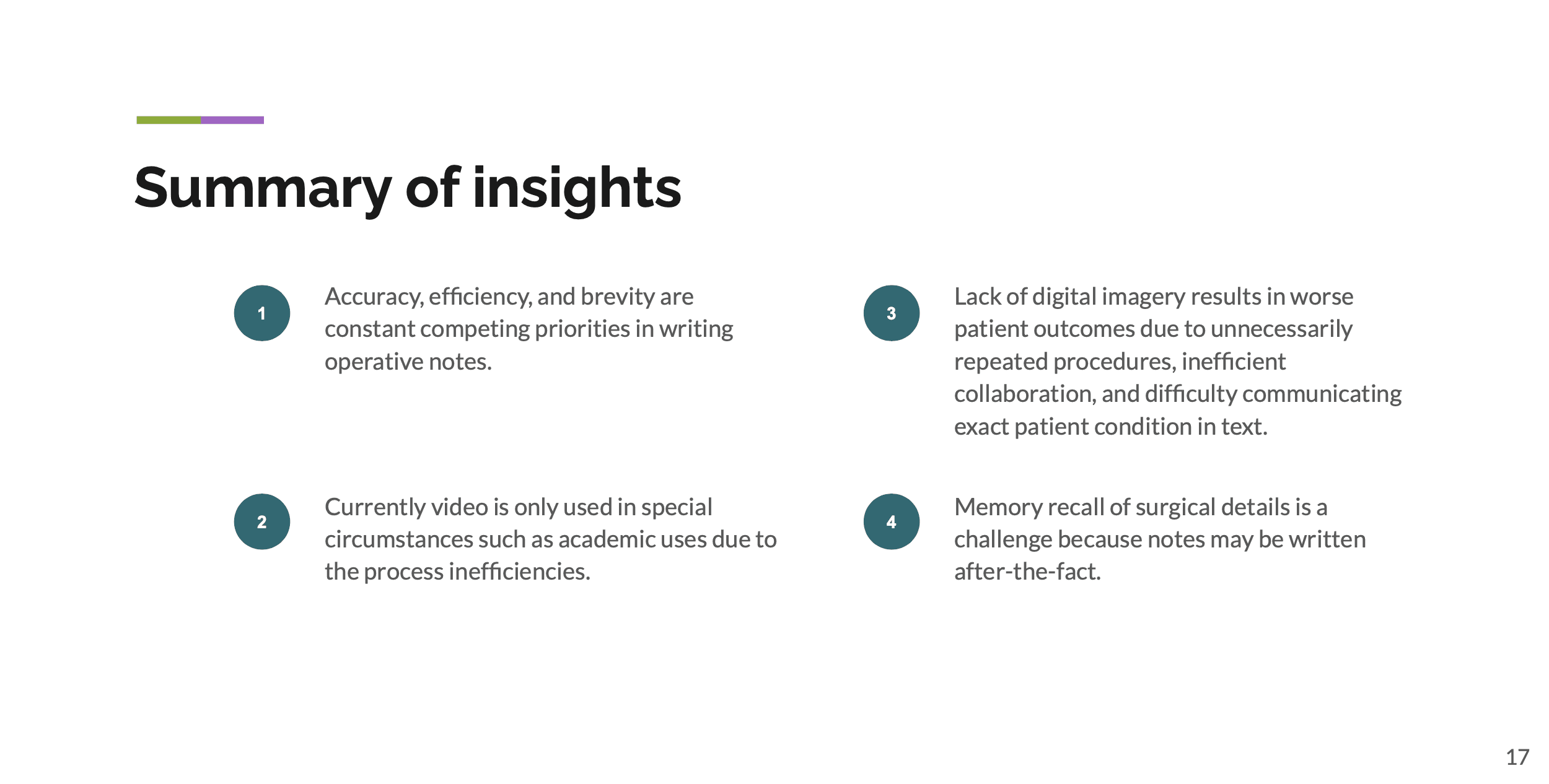
The interface could not solve who recorded the procedure, how the source moved securely, what evidence the summary preserved, or who remained responsible for the decision. Those dependencies shaped the product as much as the summarization model did.
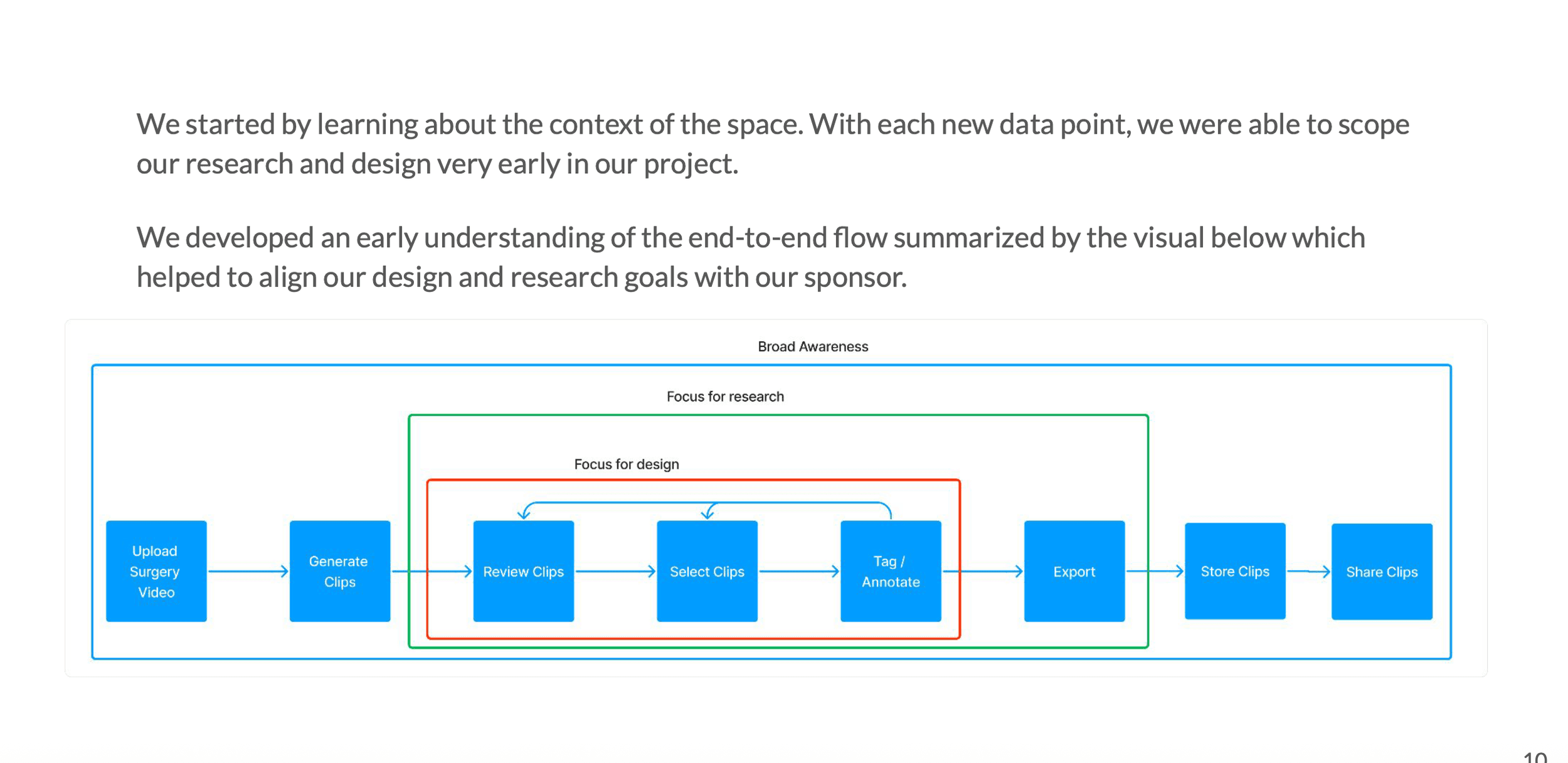
Early surgical video lifecycle map from operating-room capture to secure storage and review.
Reconstructed evidence · Early lifecycle map connecting physical capture, secure storage, and review.
Research synthesis aligning surgical video pain points with service opportunities.
Research evidence · Pain points aligned to opportunities at specific service touchpoints.

Future-state service

Connect the source to review instead of replacing it

The future-state service kept the original recording available and made the proposed summary reviewable in context.
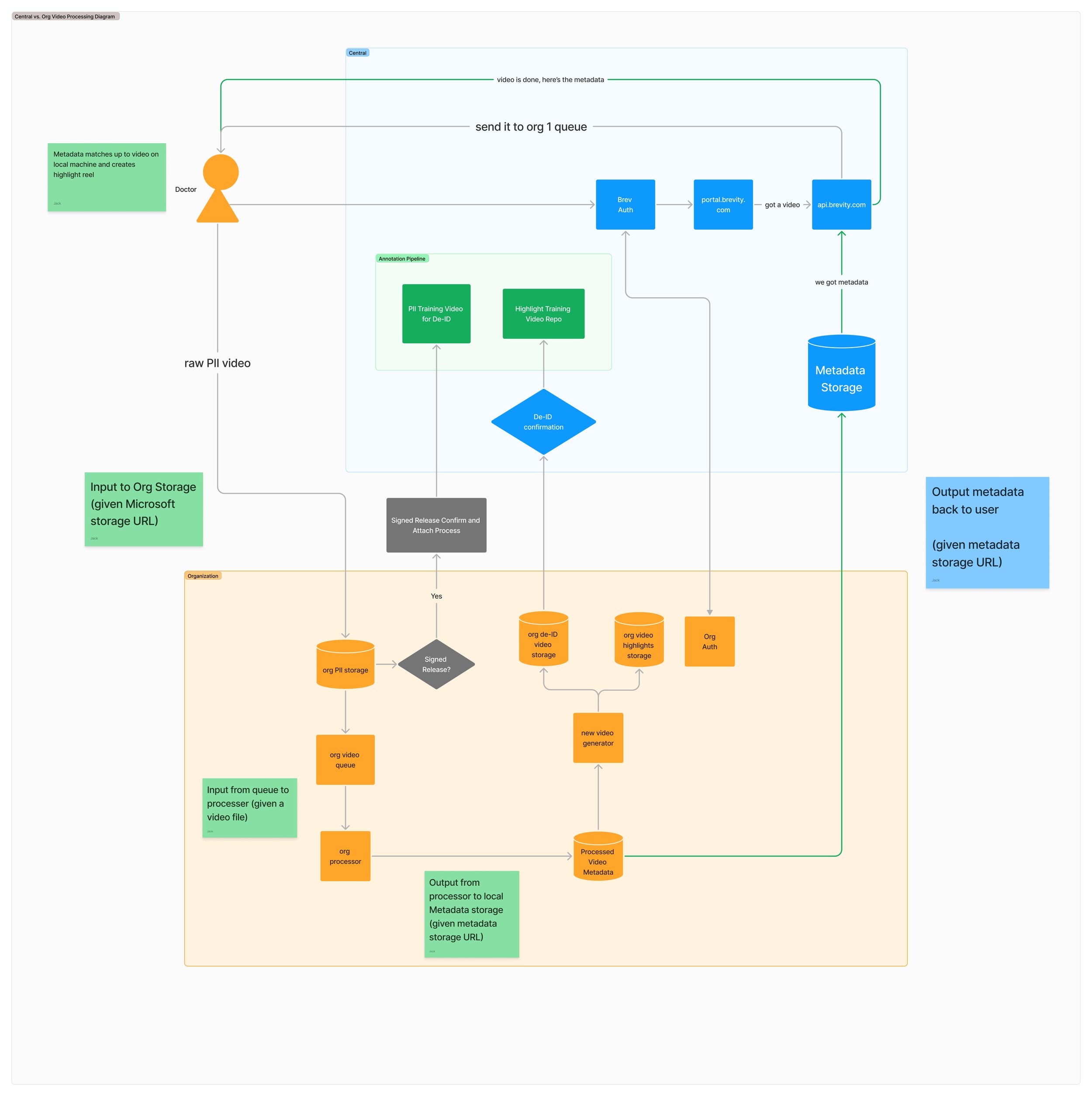
  1. Capture
  2. Secure transfer
  3. Summarize
  4. Review against source
  5. Store or share
  6. Clinician decides
End-to-end service flow connecting physical video retrieval with secure digital processing.
Designed workflow · Physical retrieval connected to secure upload, AI processing, and accountable review.

Responsibility

The system reduced the search space; the clinician owned the judgment

Residents provided source context. AI proposed relevant segments. Service infrastructure protected access and recovery. Attending clinicians reviewed the evidence and retained responsibility.

Research and synthesis

Map the clinical workflow before defining the interface

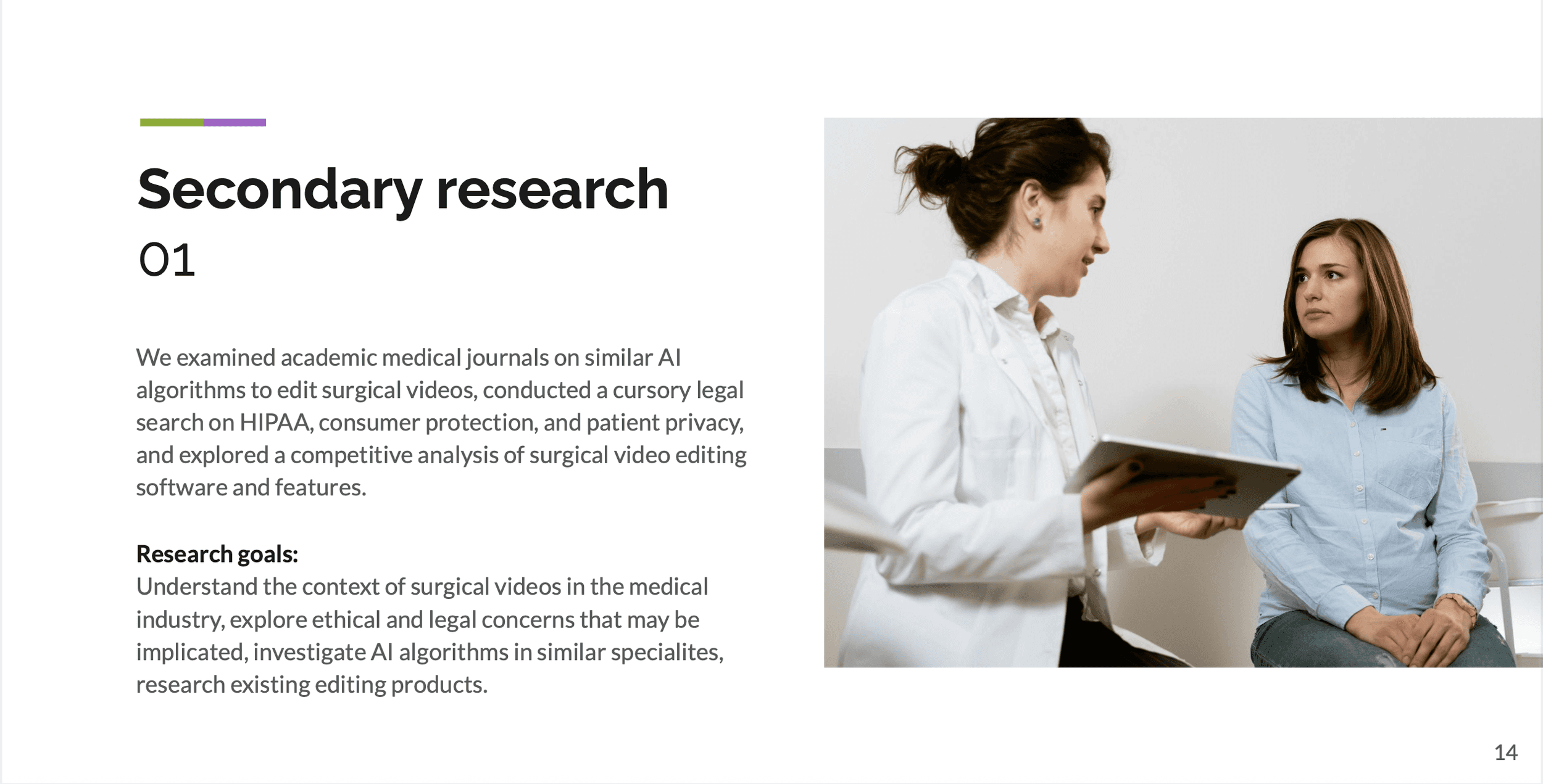
The Chronicle team combined secondary research, contextual inquiry, and interviews with ENT surgeons and residents. The work connected observed friction to specific service touchpoints rather than treating summarization as an isolated feature.
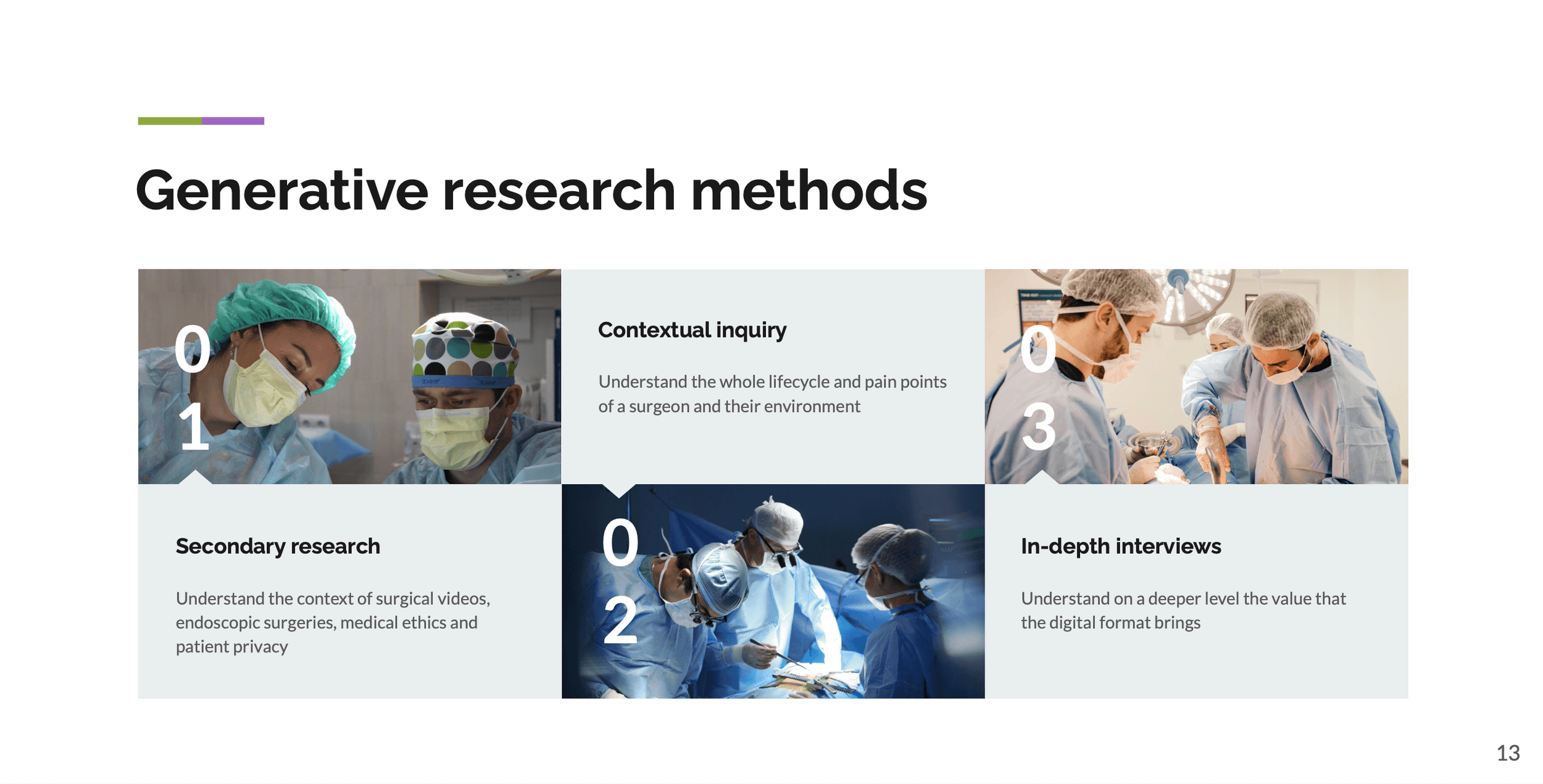
Research-method overview covering contextual inquiry, interviews, and literature review.
Research overview · Multi-method plan integrating observation, interviews, and literature review.
Research-method overview describing participants, questions, and study structure.
Research context · Participants, study questions, and inquiry structure.
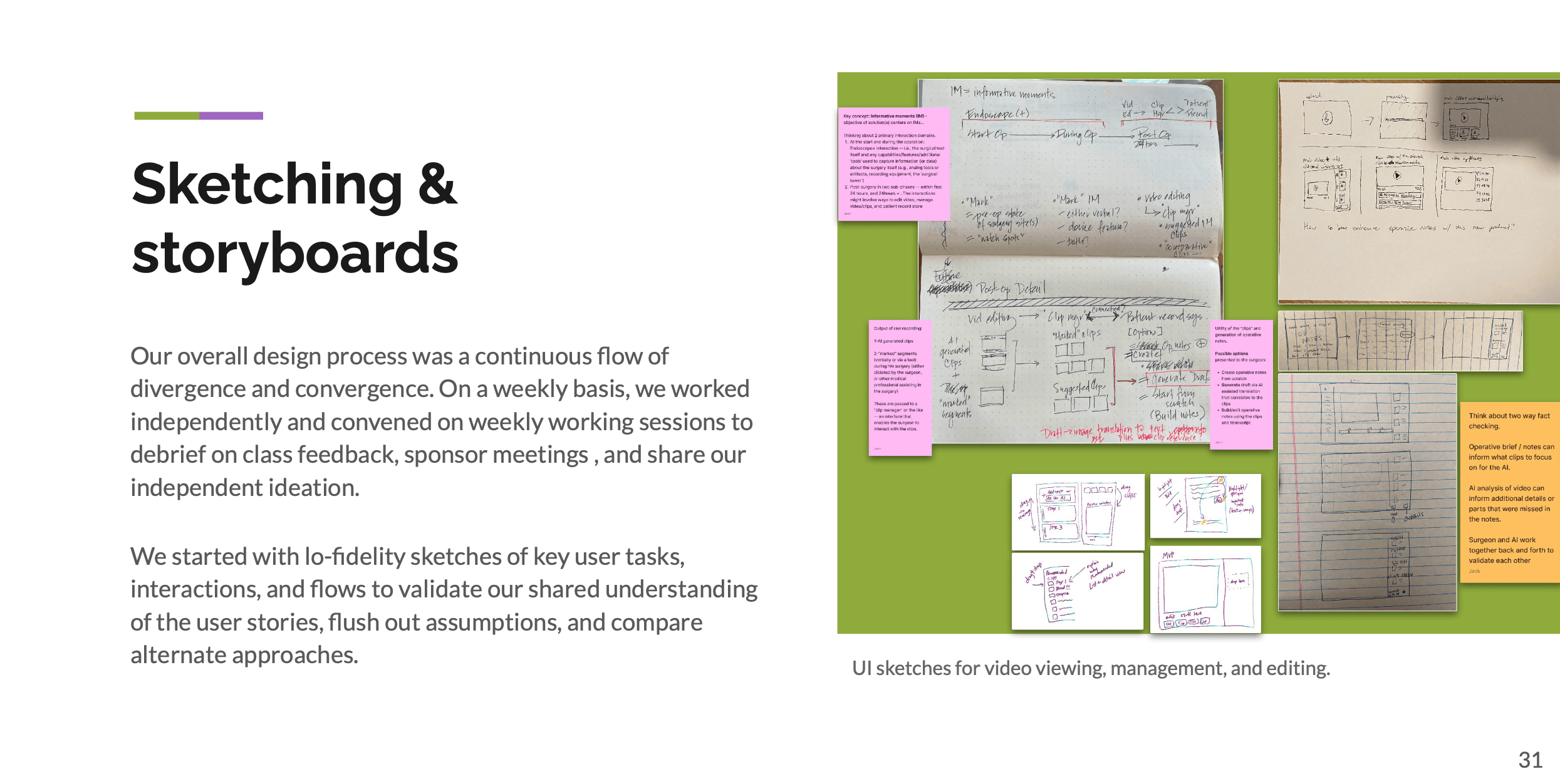
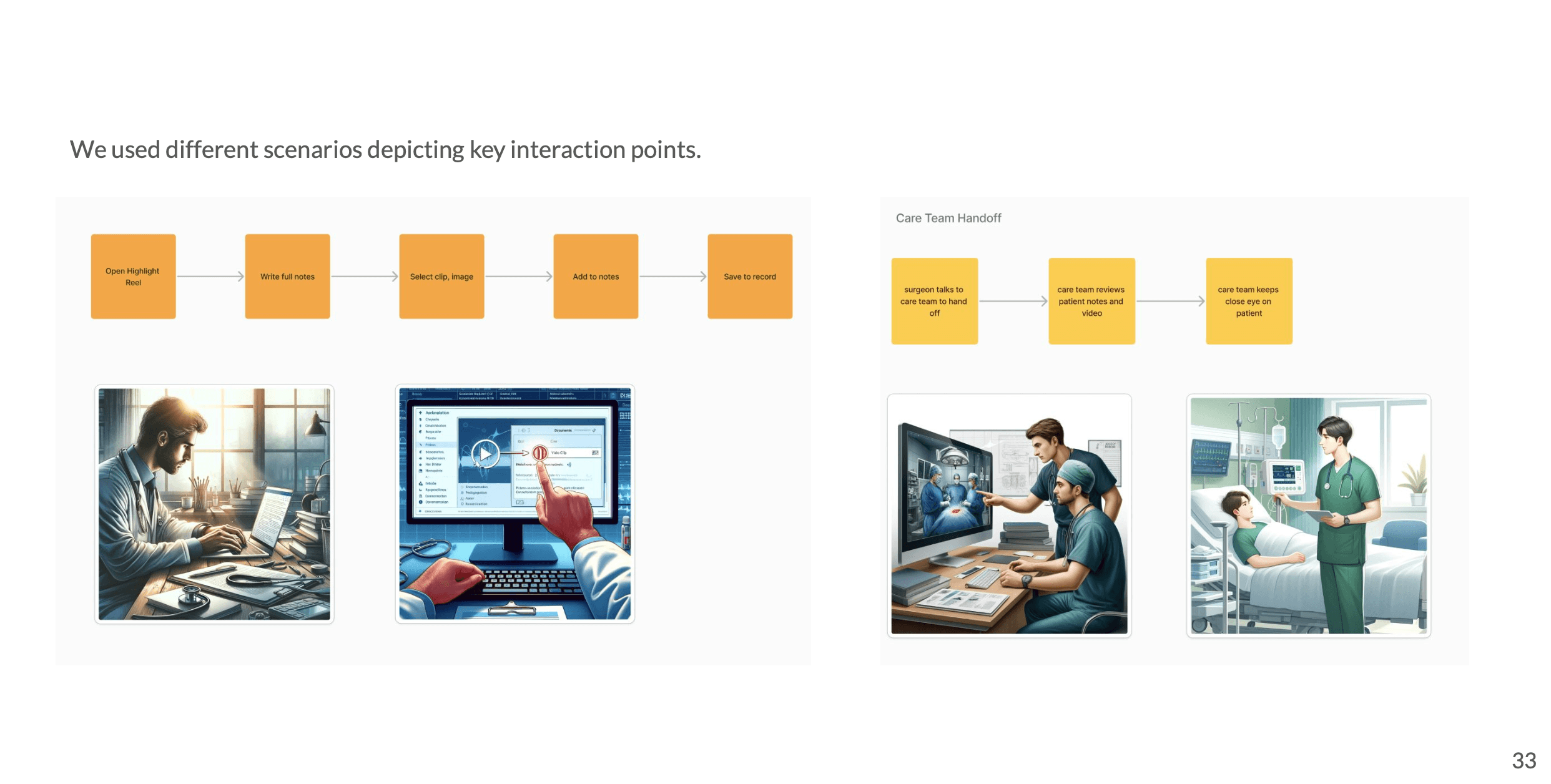
Storyboard exploring how surgical video review could fit clinical work.
Storyboard · Early service touchpoints around capture and review.
Storyboard showing service touchpoints around surgical video review and sharing.
Storyboard · Review and sharing within the broader clinical workflow.
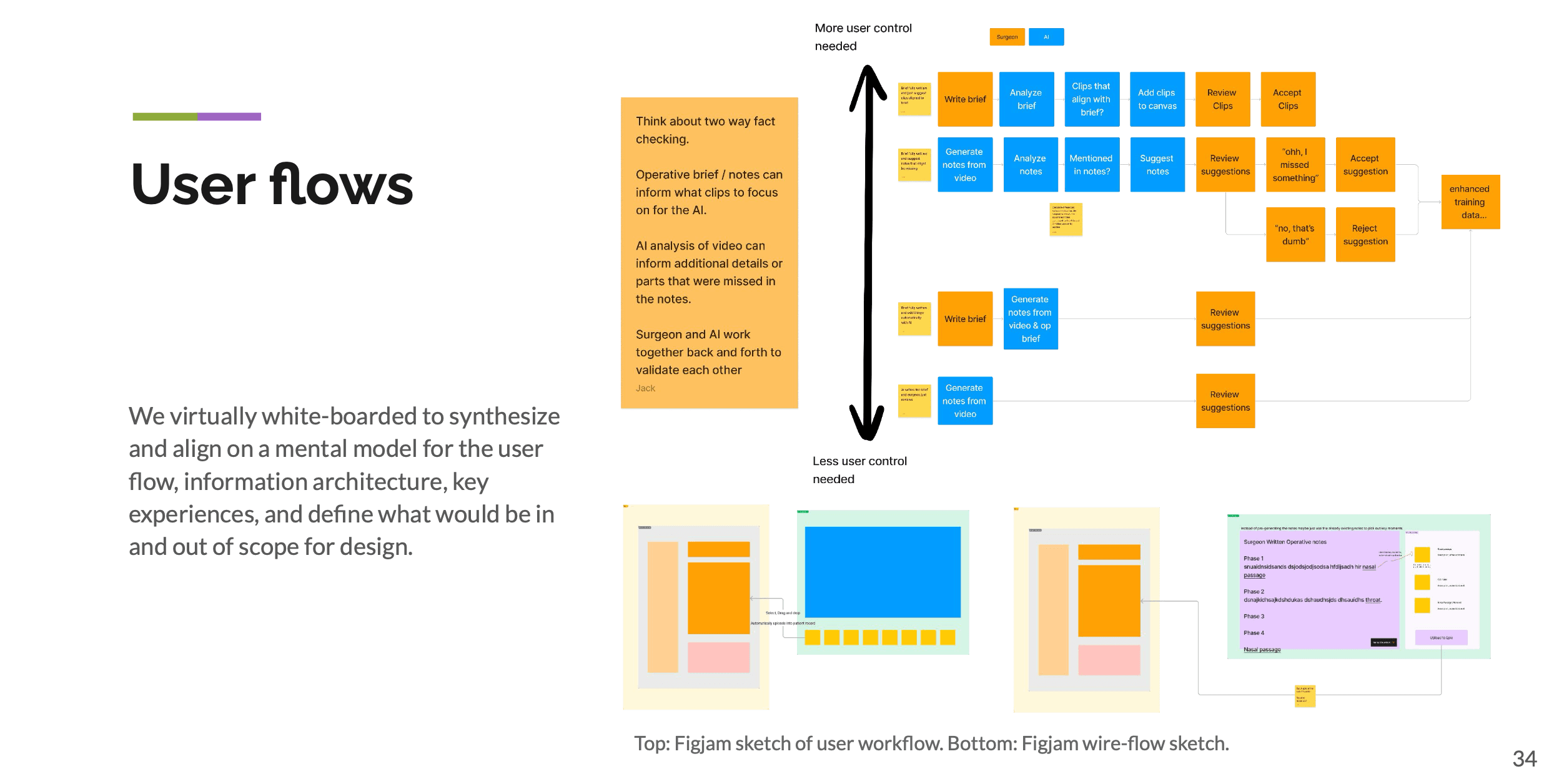
Detailed user flow from surgical-video capture through review.
User flow · Detailed path from capture through post-surgery review.

Concept development

Translate service requirements into an inspectable interaction model

Thirteen priority interactions created a shared design target. Wireframes and successive iterations then tested how navigation, playback, annotation, and evidence states could work together.
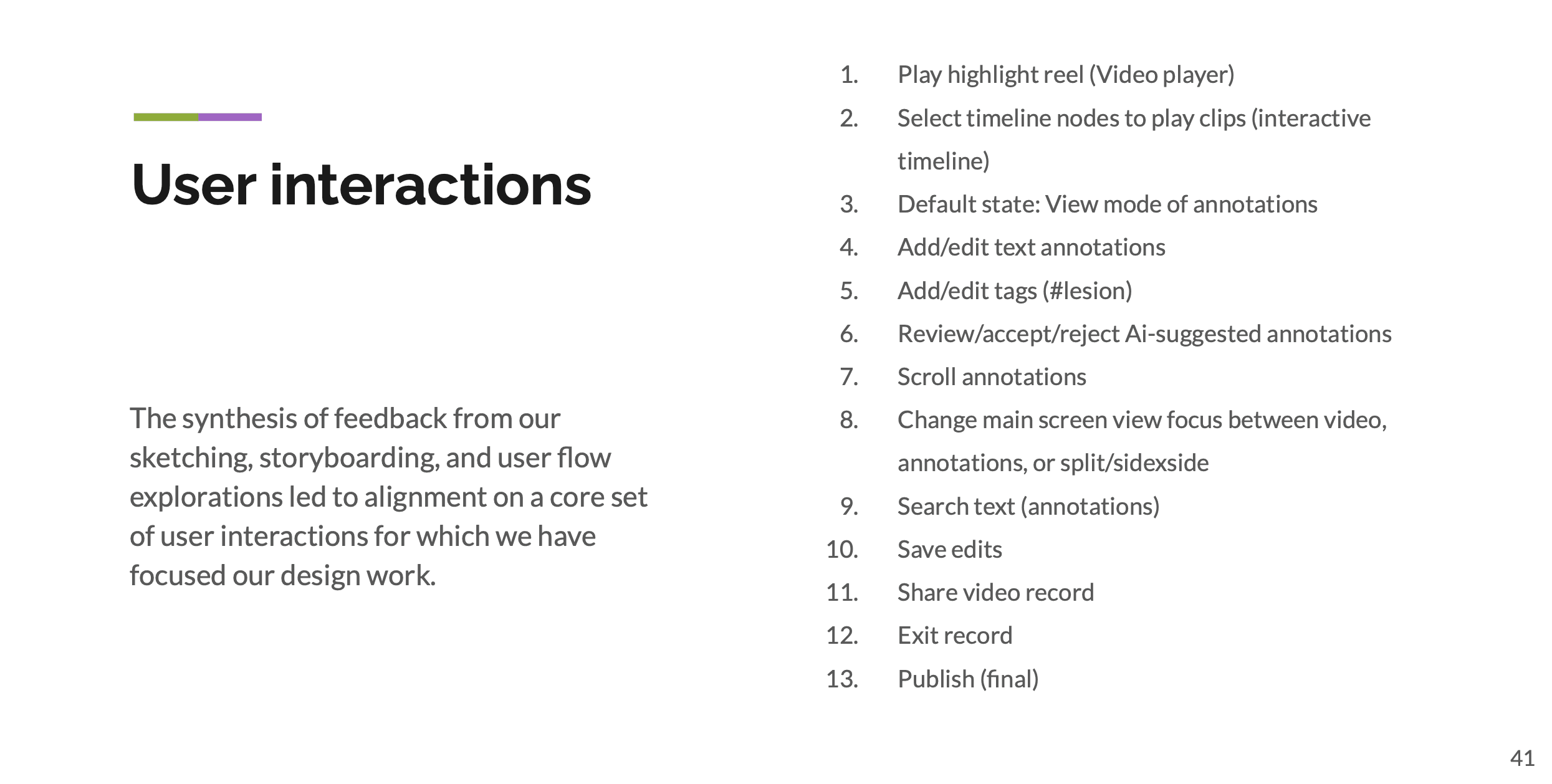
List of thirteen priority interactions used to guide the Chronicle design.
Decision artifact · Thirteen agreed priority interactions.
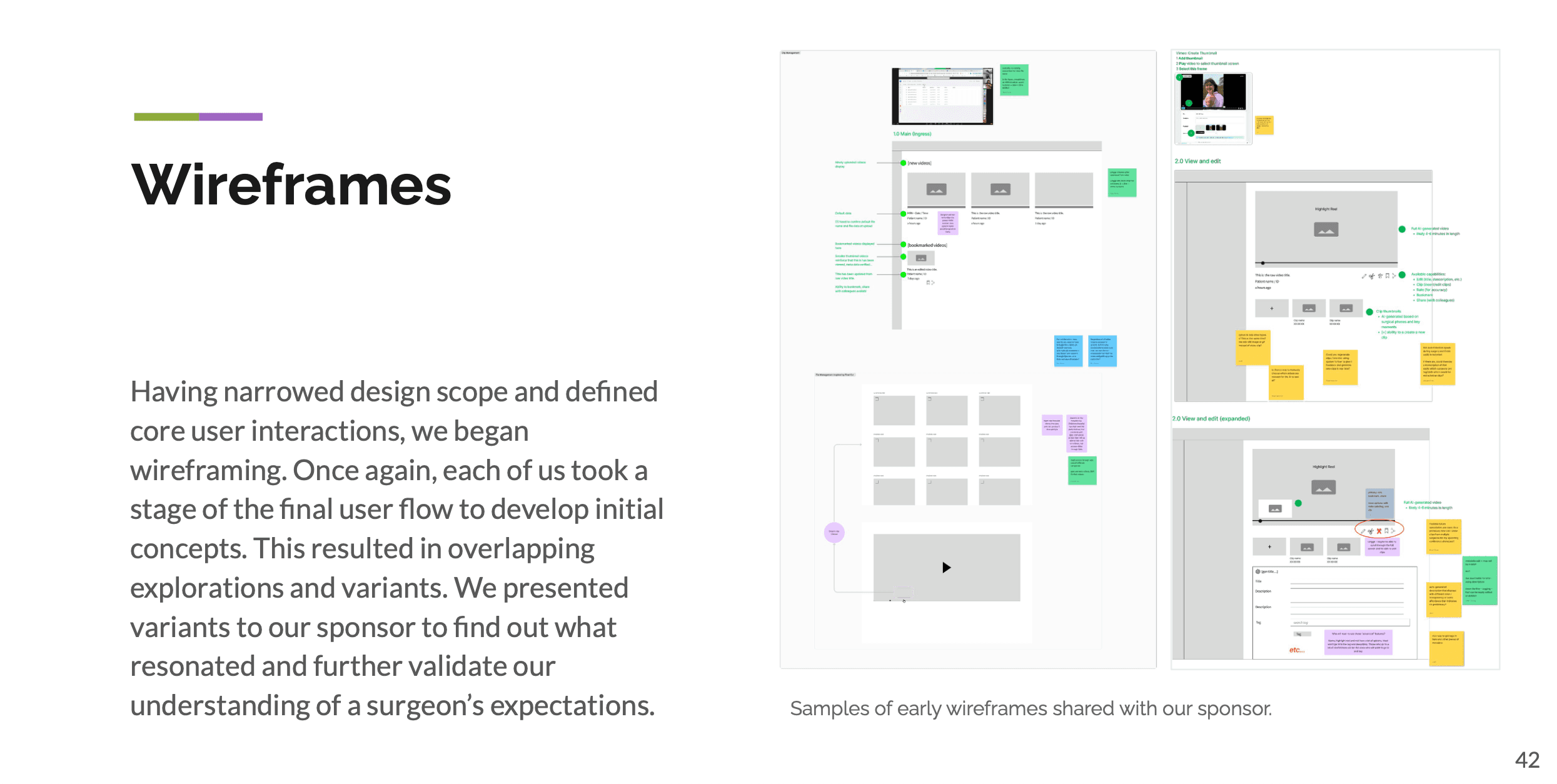
Early wireframes for navigation, playback, annotation, and review.
Wireframes · Early structural layouts for core interactions.
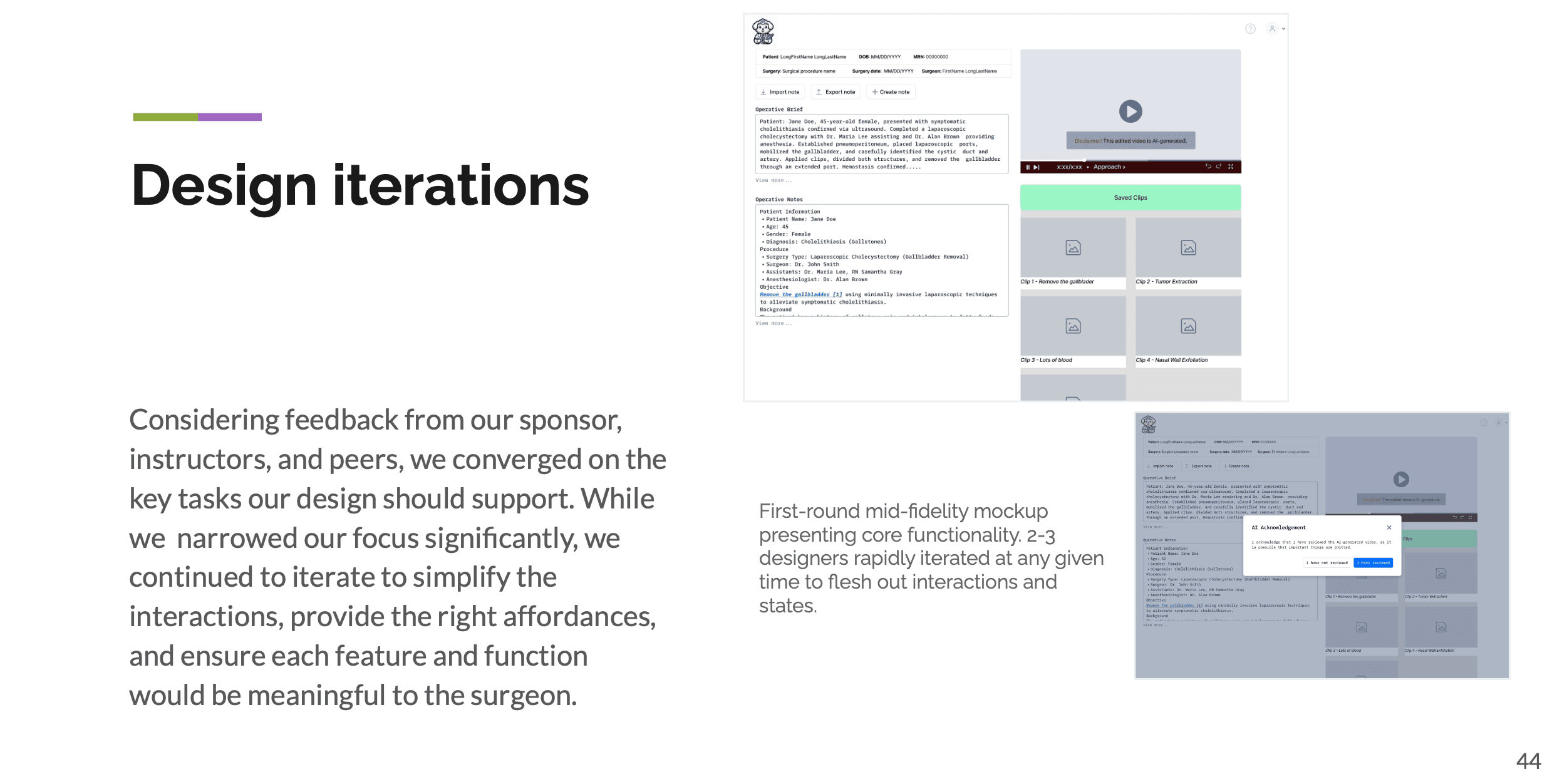
Design iterations showing progressive refinement of the clinical video interface.
Design iteration · Progressive refinement through peer, instructor, and sponsor feedback.

Evaluation and delivery

Test the interaction flow, then make evidence states accessible

Evaluative testing with peers and the sponsor informed the final interaction flow. The delivered concept distinguished AI-suggested, manually created, and bookmarked clips and documented accessibility considerations.
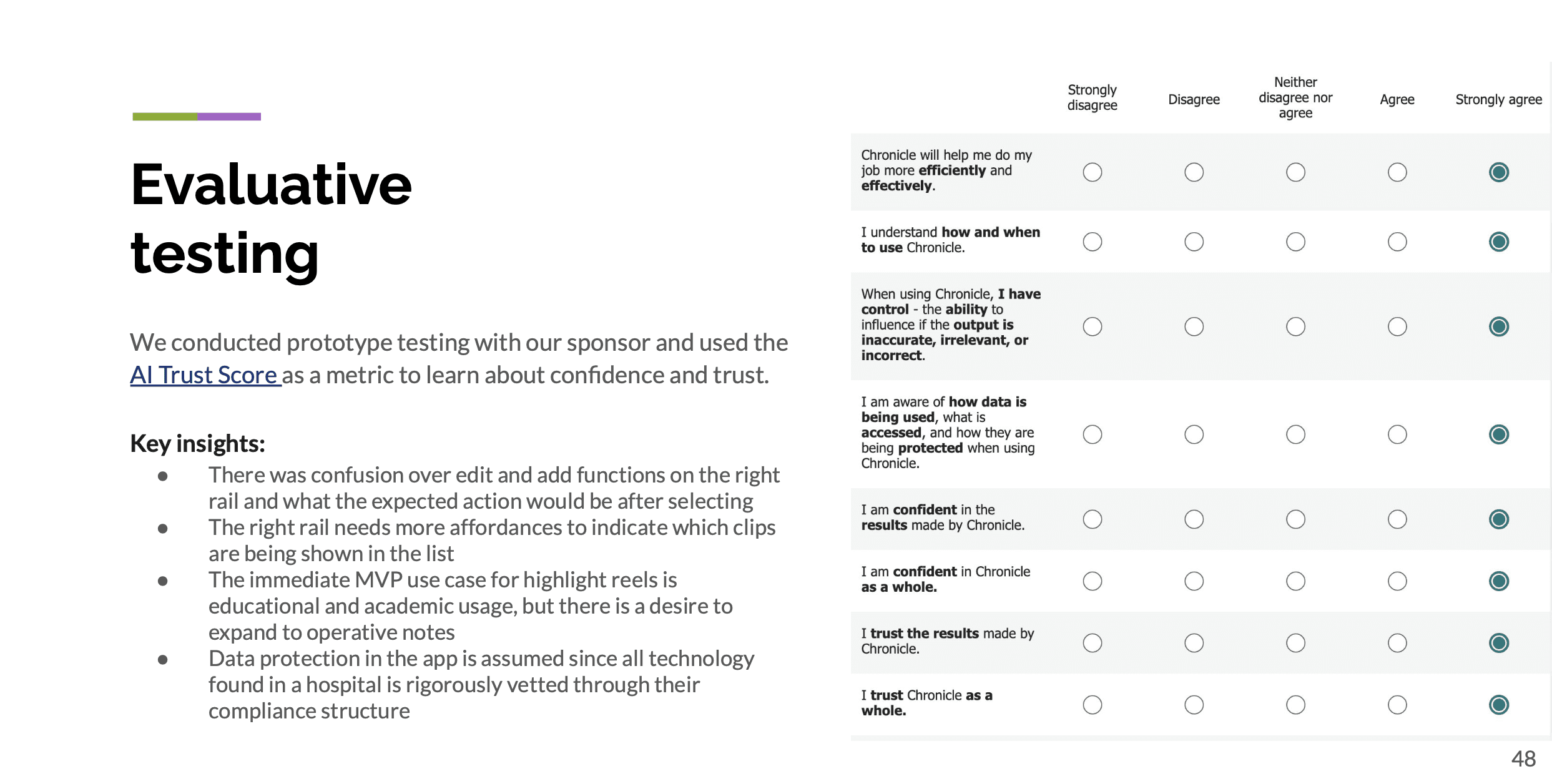
Evaluative testing artifact documenting feedback and design adjustments.
Testing artifact · Observations, feedback, and resulting adjustments.
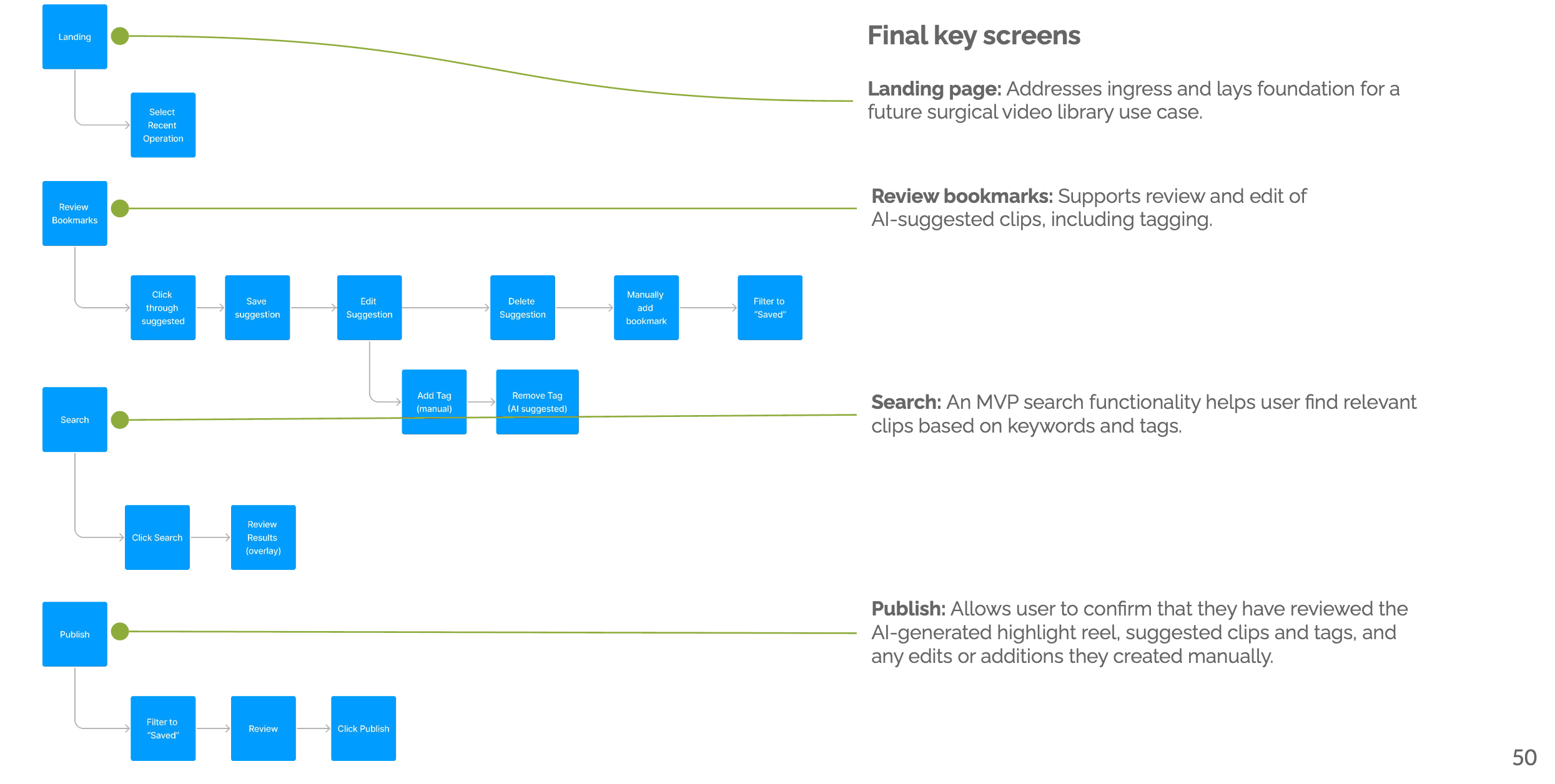
Key Chronicle screen flows for landing, review, search, and publishing.
Delivered concept · Key screen flows for landing, review, search, and publish.
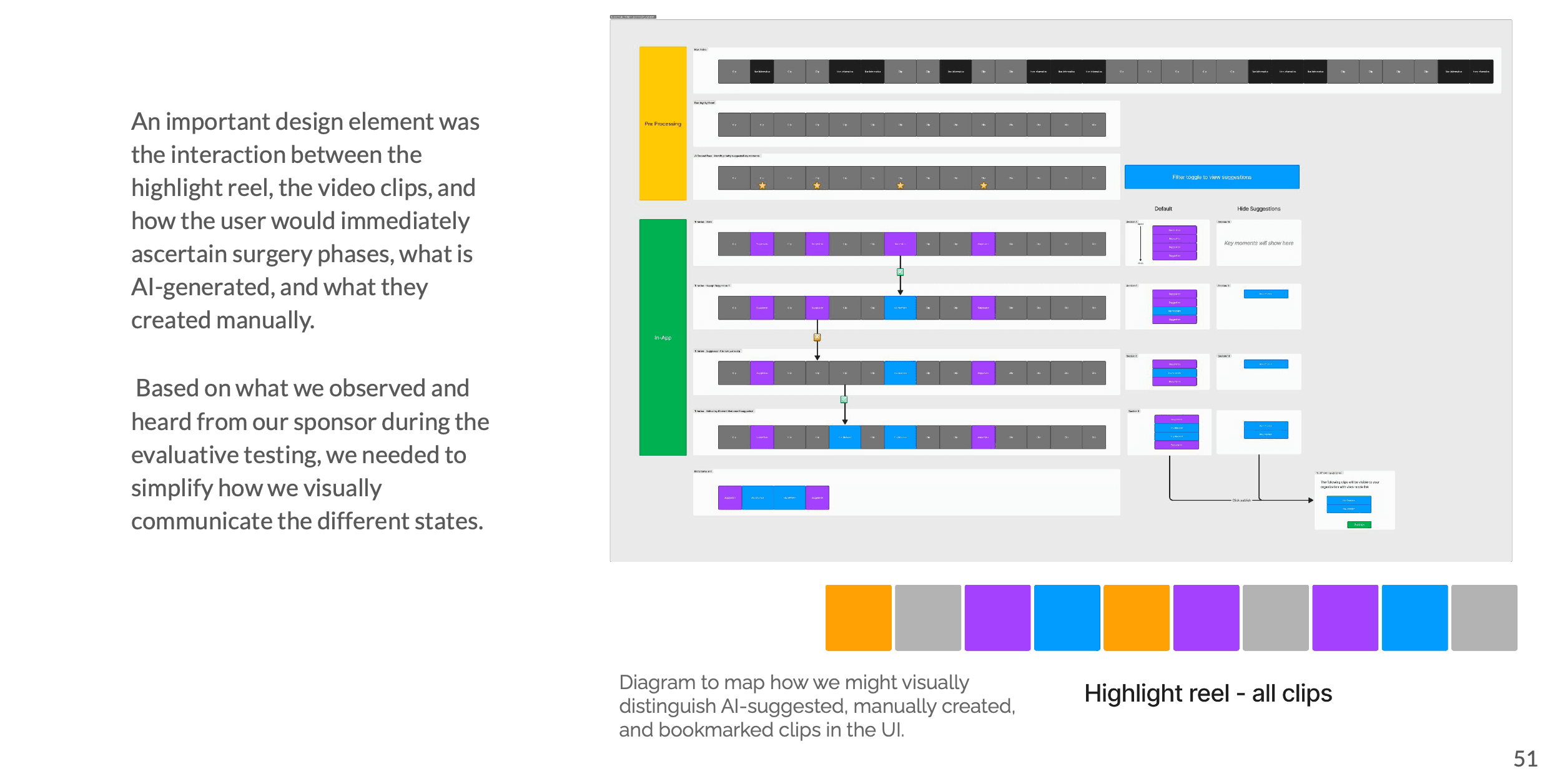
Visual key distinguishing AI-suggested, manually created, and bookmarked clips.
Evidence states · Visual distinction between AI suggestions, manual clips, and bookmarks.
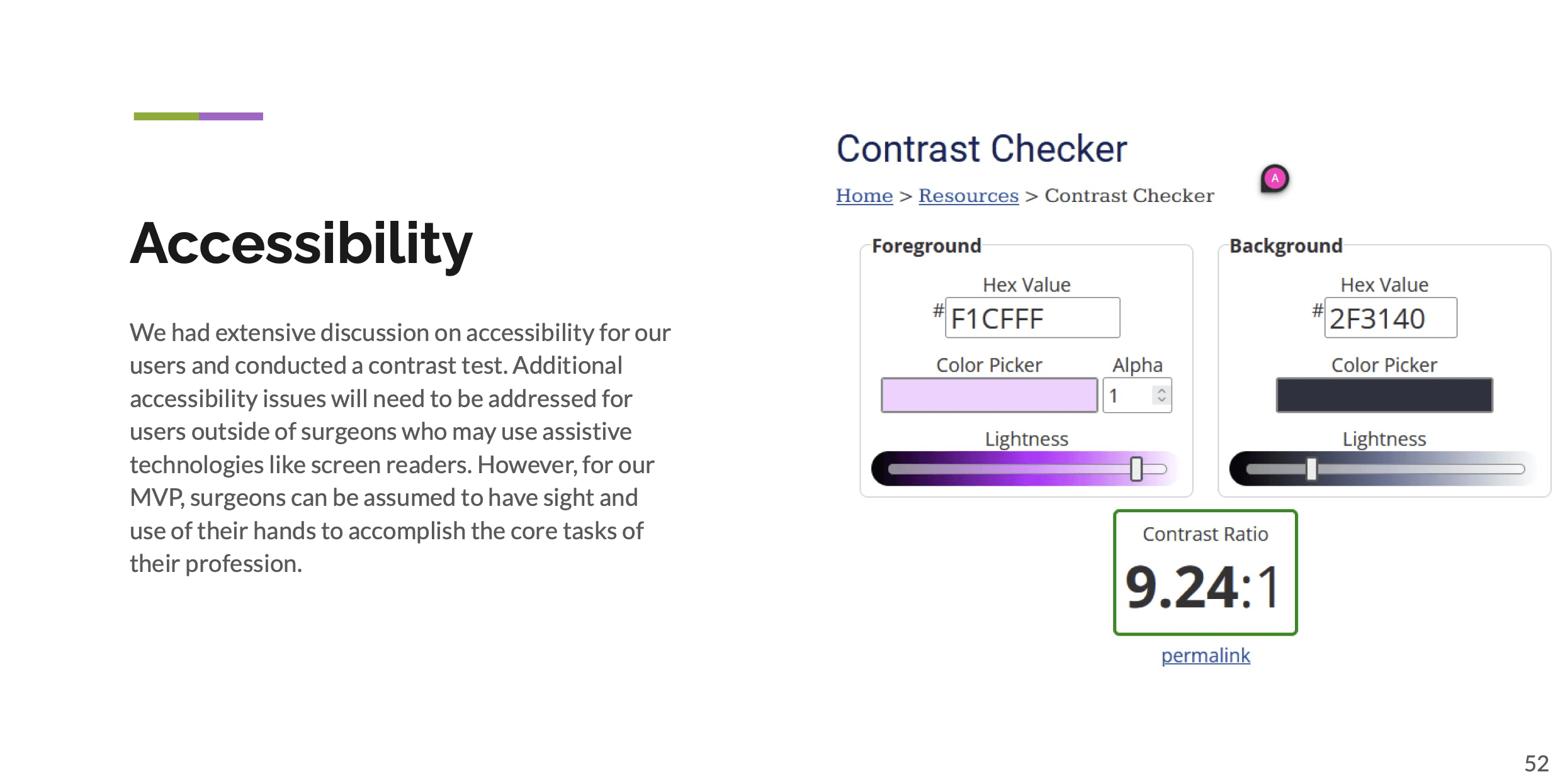
Accessibility considerations incorporated into the Chronicle interface.
Accessibility work · Considerations integrated before final delivery.
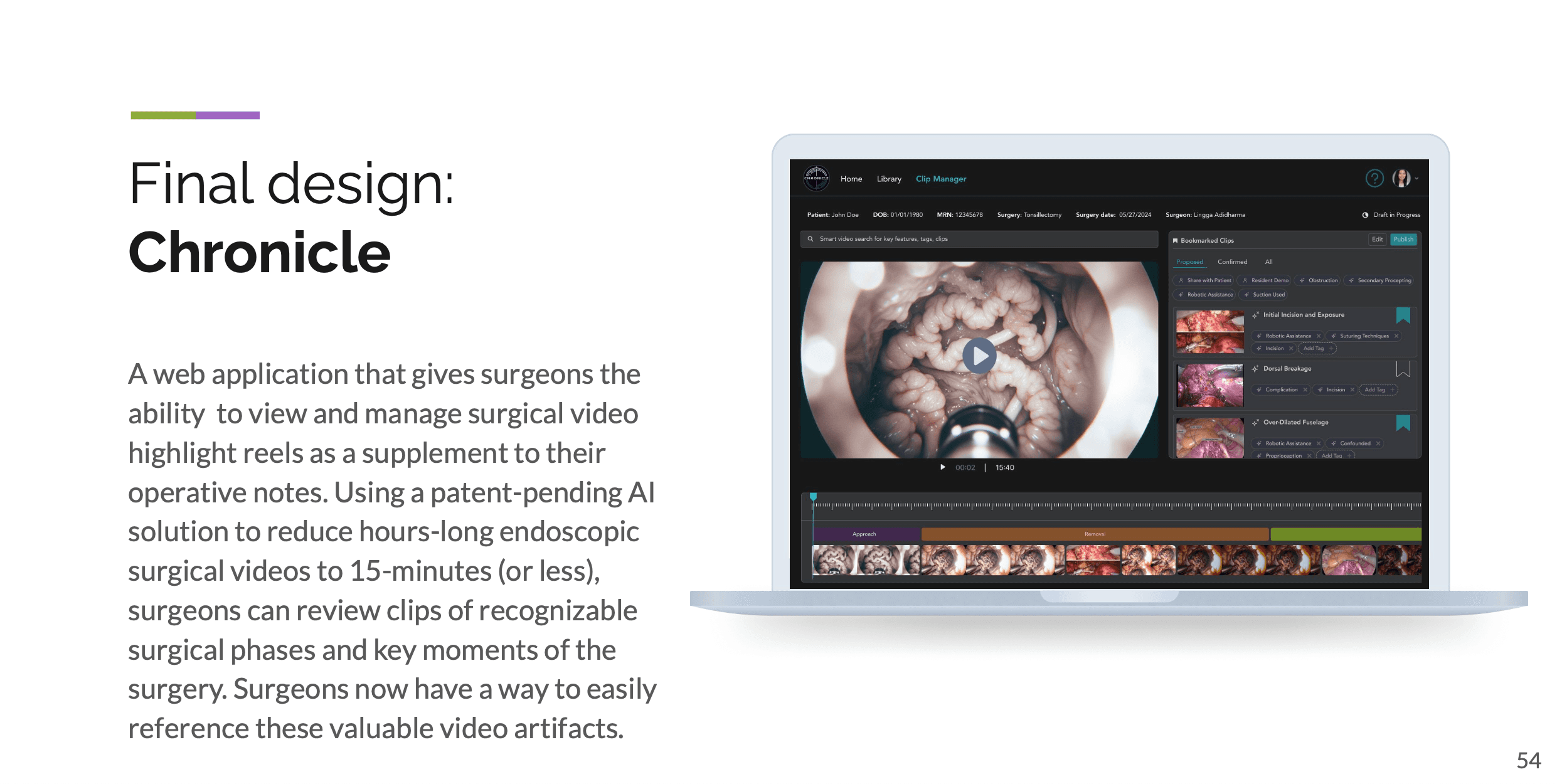
Final high-fidelity Chronicle surgical-video review screen.
Final screen · High-fidelity surgical-video review experience.

From concept to operational MVP

Test whether the workflow could survive institutional reality

After Chronicle, I co-founded Brevity AI and served as CPO and sole UX lead. I worked with a part-time CTO and clinical, technical, legal, compliance, IRB, and incubator stakeholders to translate the concept into a minimum flow across capture or retrieval, secure upload, summarization, review, and storage.

  1. User value
  2. Technical feasibility
  3. Workflow readiness
  4. Reviewer confidence
  5. Institutional fit
  6. Adoption risk

Use-case pivots

Consultation support advanced because it fit roles and incentives

Procedure documentation was deprioritized, conference preparation remained exploratory, and malpractice-risk reduction failed validation. Consultation support advanced because it fit existing work more closely.
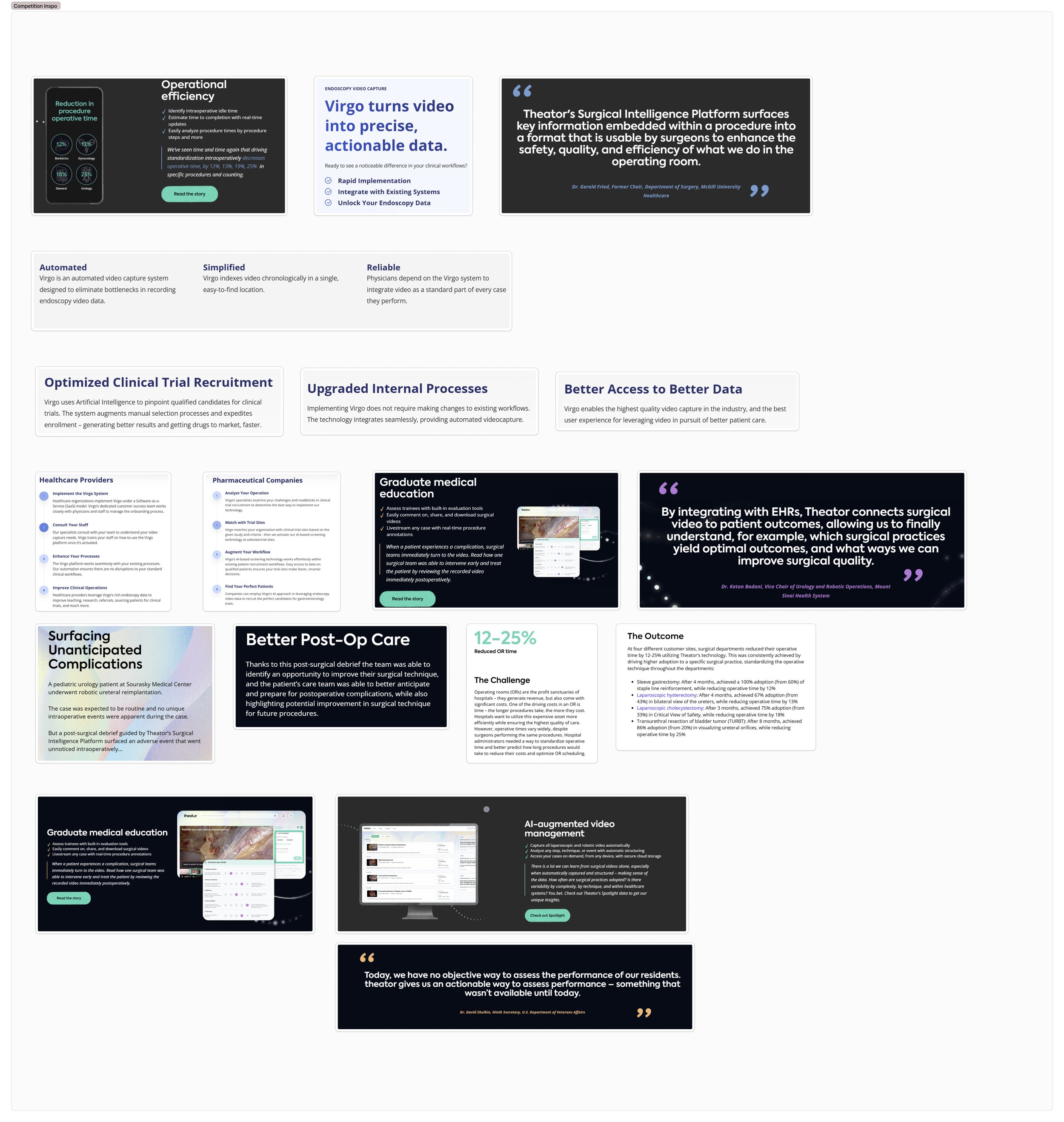
Competitive landscape used to compare documentation, training, and efficiency services.
Exploratory evidence · Landscape scan used to compare service positions; it did not validate market demand.
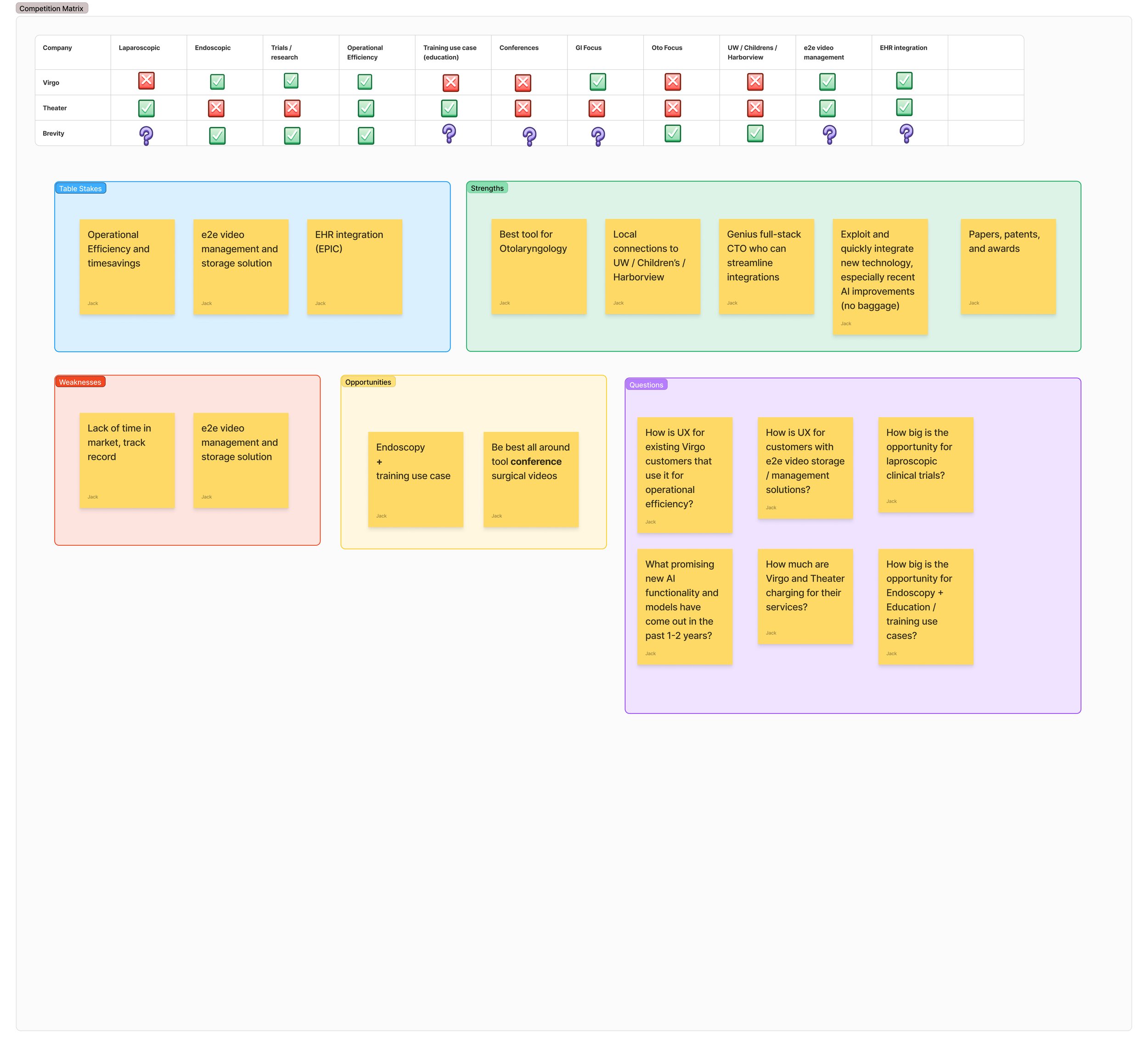
Feature matrix comparing Brevity with adjacent surgical-video services.
Competitive matrix · Comparative features and market positions used for strategy, not proof of demand.
Backstage storage optimization workflow for surgical video evidence.
Proposed backstage workflow · Storage logic was designed but the savings were not measured.

Pilot evidence

Pilot confidence was encouraging, but bounded

The public record describes six ENT consultation videos and reports unanimous 5/5 confidence in the summarized-video condition. Exact reviewer count, note scores, and the rating instrument were not preserved, so this remains a promising confidence signal rather than evidence of clinical efficacy.

Outcome and limits

Separate what was completed, tested, proposed, and not claimed

The work established the service model, high-fidelity interaction patterns, an operational MVP flow, use-case decisions, and a bounded pilot signal. Brevity closed because of funding constraints before broader institutional deployment could be tested.

  1. Completed: research synthesis, service mapping, high-fidelity flows, and an operational MVP workflow
  2. Tested: a surgeon-reviewed concept, use-case hypotheses, and a six-video consultation pilot
  3. Proposed: failure behavior, confidence signals, and storage optimization
  4. Not claimed: clinical efficacy, regulatory approval, measured time savings, scaled adoption, or EHR integration

Takeaway

Place AI inside the chain of responsibility, not above it

In high-trust work, an AI experience must make three things clear: what evidence the system used, where a person must review it, and who remains responsible for the decision. The goal was a workflow useful enough to change the work and explicit enough to preserve human judgment.

Service design, human-centered AI, and workflow transformation

I help teams make complex workflows clearer, more reviewable, and easier to act on.

© 2026 Ariel KohSeattle, Washington