Supporting work · Mercedes-Benz · Interaction design
Put the hotline first.
Most drivers requesting roadside assistance used WeChat or called the hotline. Mercedes-Benz still wanted to keep a web request form, so I worked on making that option easier to use while keeping the hotline visible before the form.
A choice before the form
Focused view of the original wireframe. The gray box is where the hotline number goes.
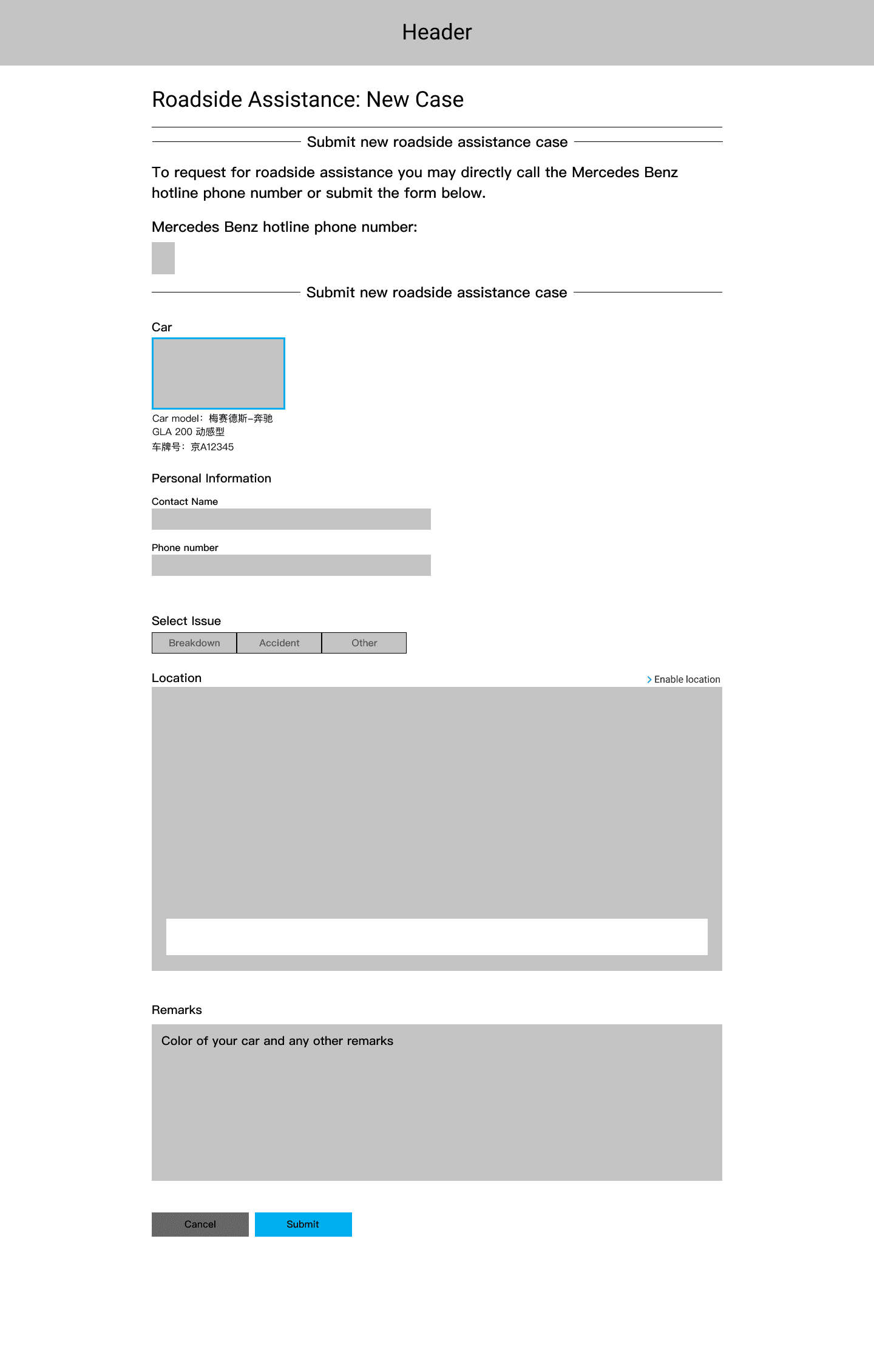
The instruction offers two routes: call the hotline or submit the form below. The hotline number sits before the first vehicle field as a tap-to-call link, so a driver on a phone can reach a person in one tap.
The decision
Management kept the web form, so I put the hotline first.
Few drivers used the web request, because it meant logging in to the Mercedes-Benz website and filling out a form. I wanted to reduce that burden. With the hotline before the form, a driver who needed urgent human help did not first have to complete the digital path.
The main principle was to pre-fill everything the account already knew. Once a driver logged in, the form selected their vehicle and filled in their details, so they only added what had changed: the incident, the location and how to reach them. Most owners had one car, so the preselection was usually right, and anyone with more could change it.
Original control excerpt
Pre-filled, and still editable.

Flow and feedback
How drivers knew what was happening with their request.
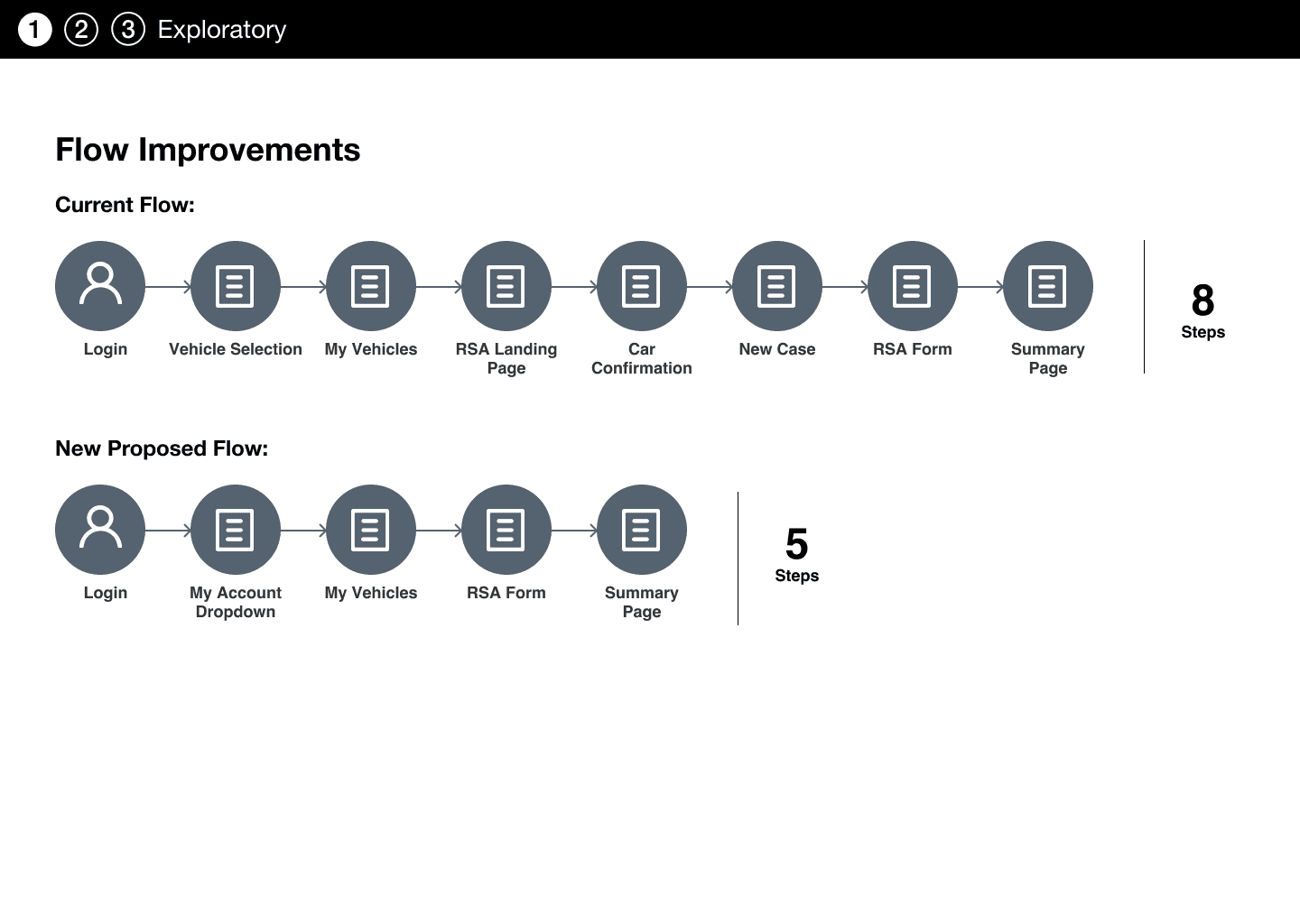
The request path went from eight steps to five. I removed the intermediate landing and confirmation pages and kept login, vehicle context, the request form and a summary.
The original status sheet distinguishes requested, confirmed, dispatched and on-site. It then branches: the technician path includes repair completed; the tow-truck path includes towing and arrival at the dealership before completion. Each state tells the driver what the service is doing next.
What I would measure
Test the whole request, including recovery.
I would test a wrong-plate or wrong-location request, a switch from web to phone and an unclear dispatch status. Can the driver correct the request, explain what happens next and reach support without creating a duplicate case? I would include people for whom voice calling is difficult, and check what information the hotline agent actually receives.
Next: the design system behind this portfolio →