Phase one
Positive movement in package-search starts
The surviving records support positive movement, but the exact percentage is unresolved.
Costco Travel · Search and discovery
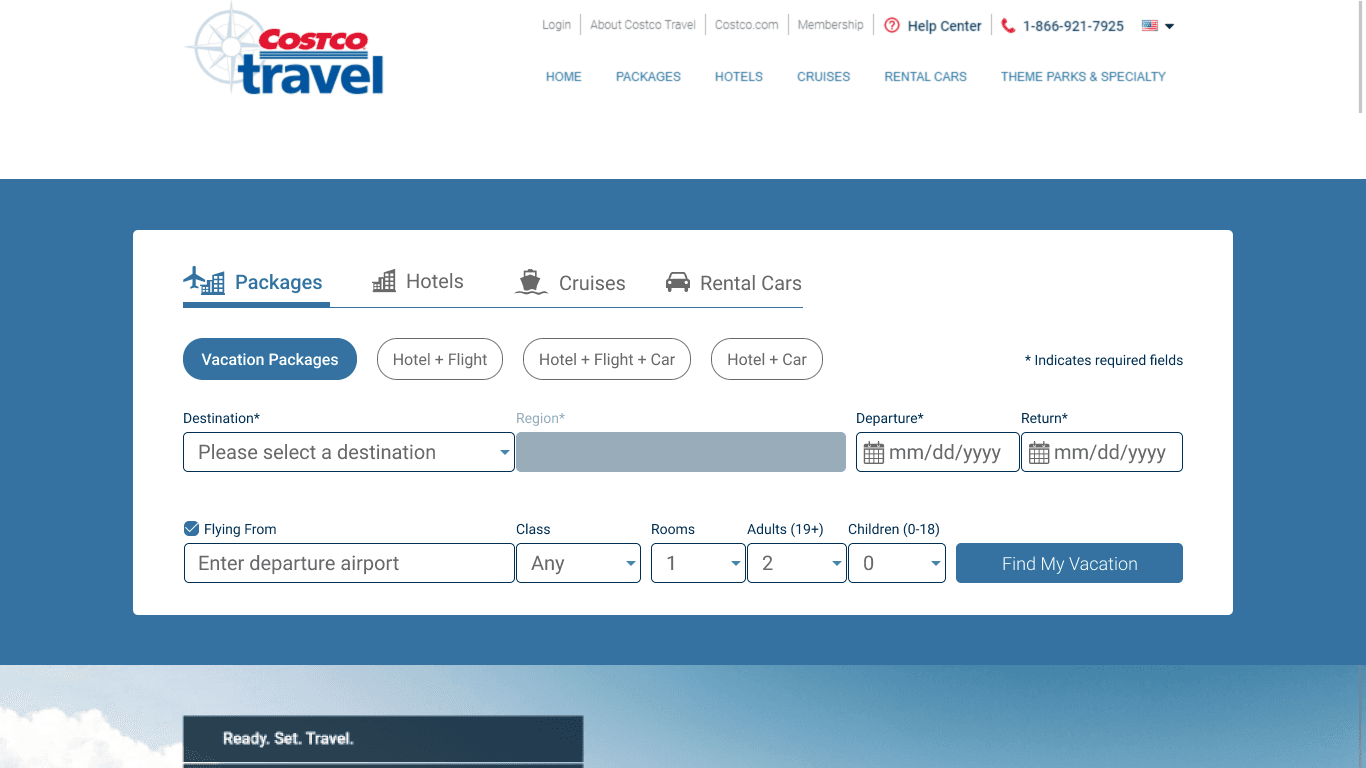
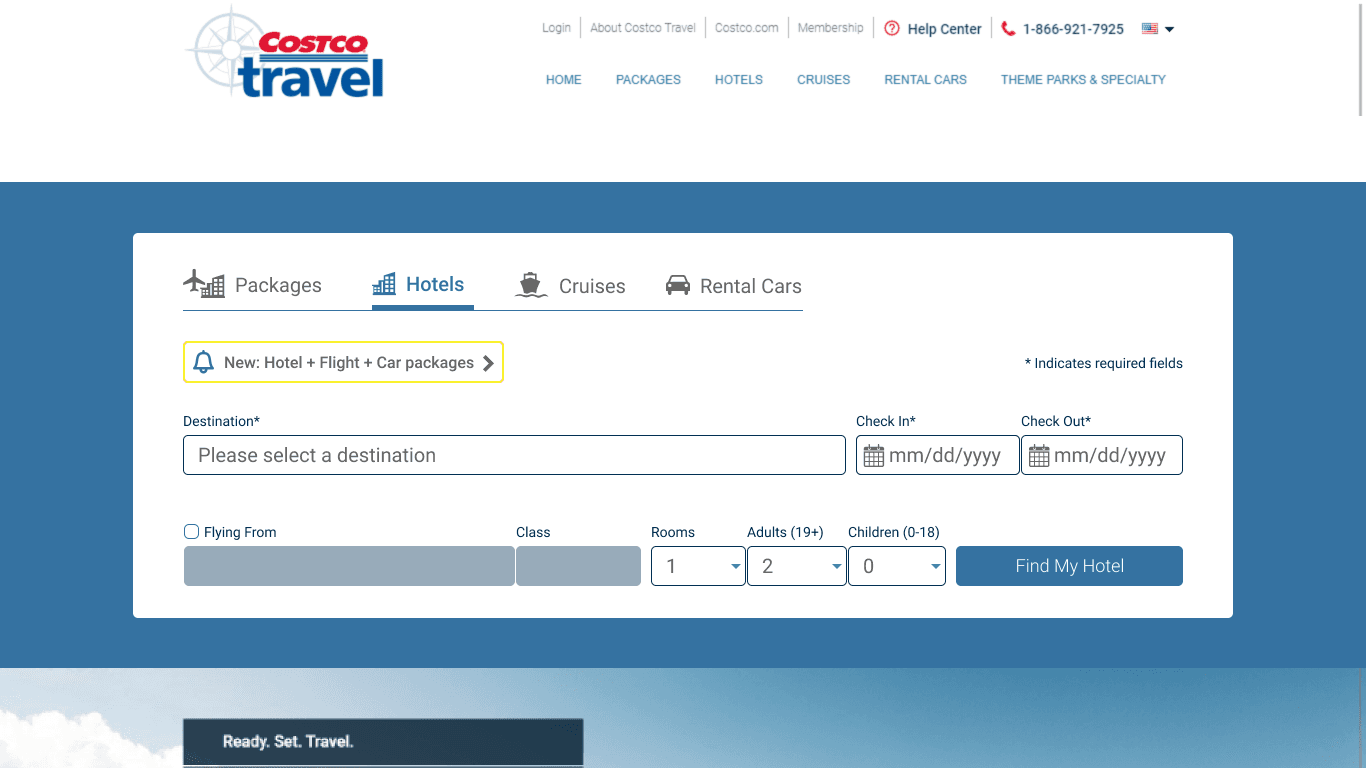
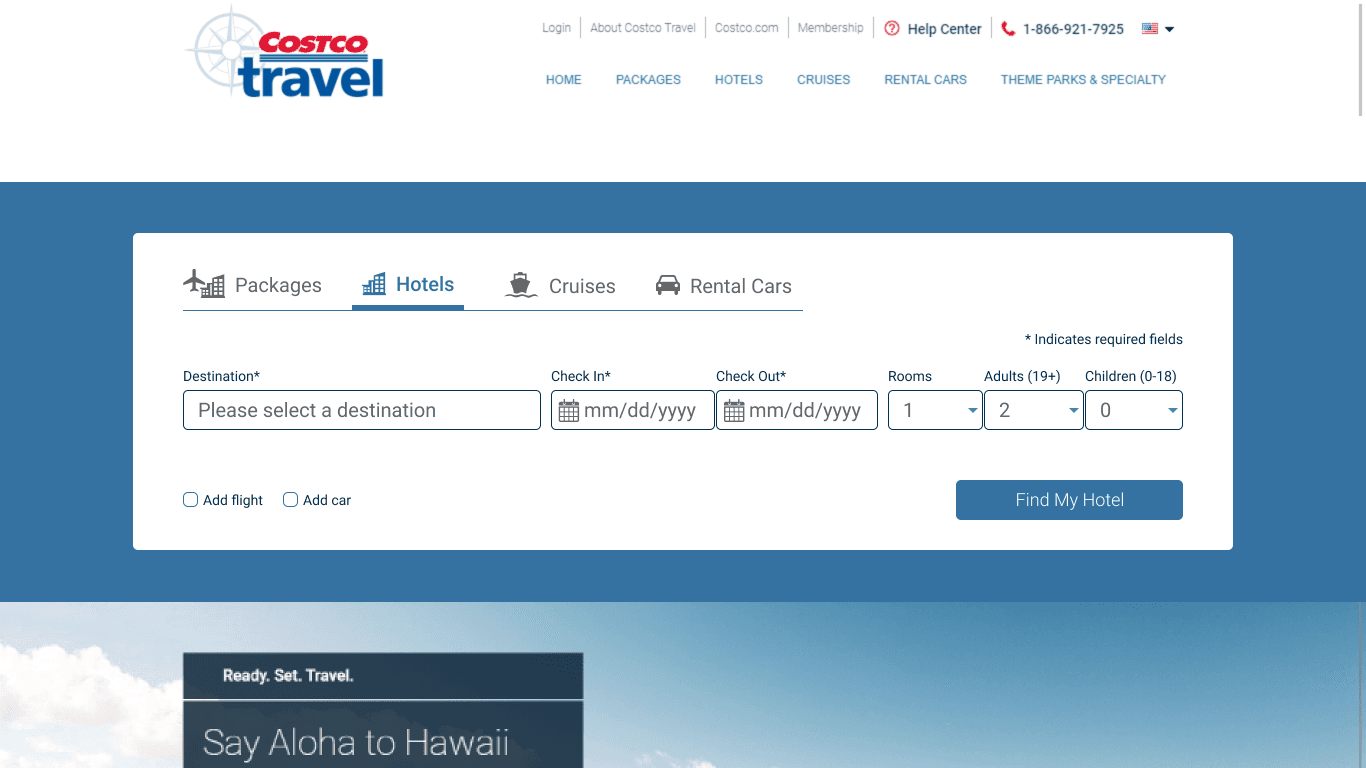
The widget looked like a compact form, but it was asking travelers to make several different decisions at once. I split the work into two experiments: clarify what a package includes, then make hotel-only intent clear without removing optional flight and car choices.
Phase one
The surviving records support positive movement, but the exact percentage is unresolved.
Phase two
The surviving records support positive movement, but the metric labels conflict.
Evidence boundary
Original experiment exports are needed before publishing precise values.
Business context
From 2020 to 2022, the search widget was the gateway to packages, hotels, cruises, and rental cars. I led two phases that paired interface changes with defined search behaviors while the organization was still building confidence in A/B testing.
Service challenge
Vacation packages, hotels, cruises, and rental cars shared one entry point. The issue was not simply that the widget looked dense. It asked people to choose a product model before the interface had explained what that choice meant.

Phase one
A nine-site scan, analytics, iterative concepts, and usability testing supported stronger grouping, contrast, and field hierarchy. The selected variant moved into an A/B test focused on package-search starts.
Phase two
The second question was narrower: how should a traveler begin a hotel-only search? An earlier concept became useful once the evidence and task were specific. Flight and car moved into optional secondary controls rather than remaining co-equal decisions.
Experiment flow
This reconstructed flow shows how the design work narrowed an ambiguous gateway into testable decisions and connected each direction to a specific behavioral measure.
Reconstructed from preserved concepts, test notes, and outcome summaries. Sample, duration, and statistical-significance records are not included in the surviving public materials.
On smaller screens, each stage is stacked for easier reading.
Validation
The work combined analytics, a nine-site competitive review, iterative concepts, usability testing, and two launched A/B tests. Current records consistently support positive directional movement in the targeted search behaviors.
Outcome and limits
Both experiments moved targeted search behaviors in a positive direction. The surviving materials conflict on the precise values and labels, so this case study does not publish exact percentages without the original exports.
Takeaway
Once the team named the decision each version was asking the traveler to make, the interface became easier to explain, build, and measure.
Next case study